


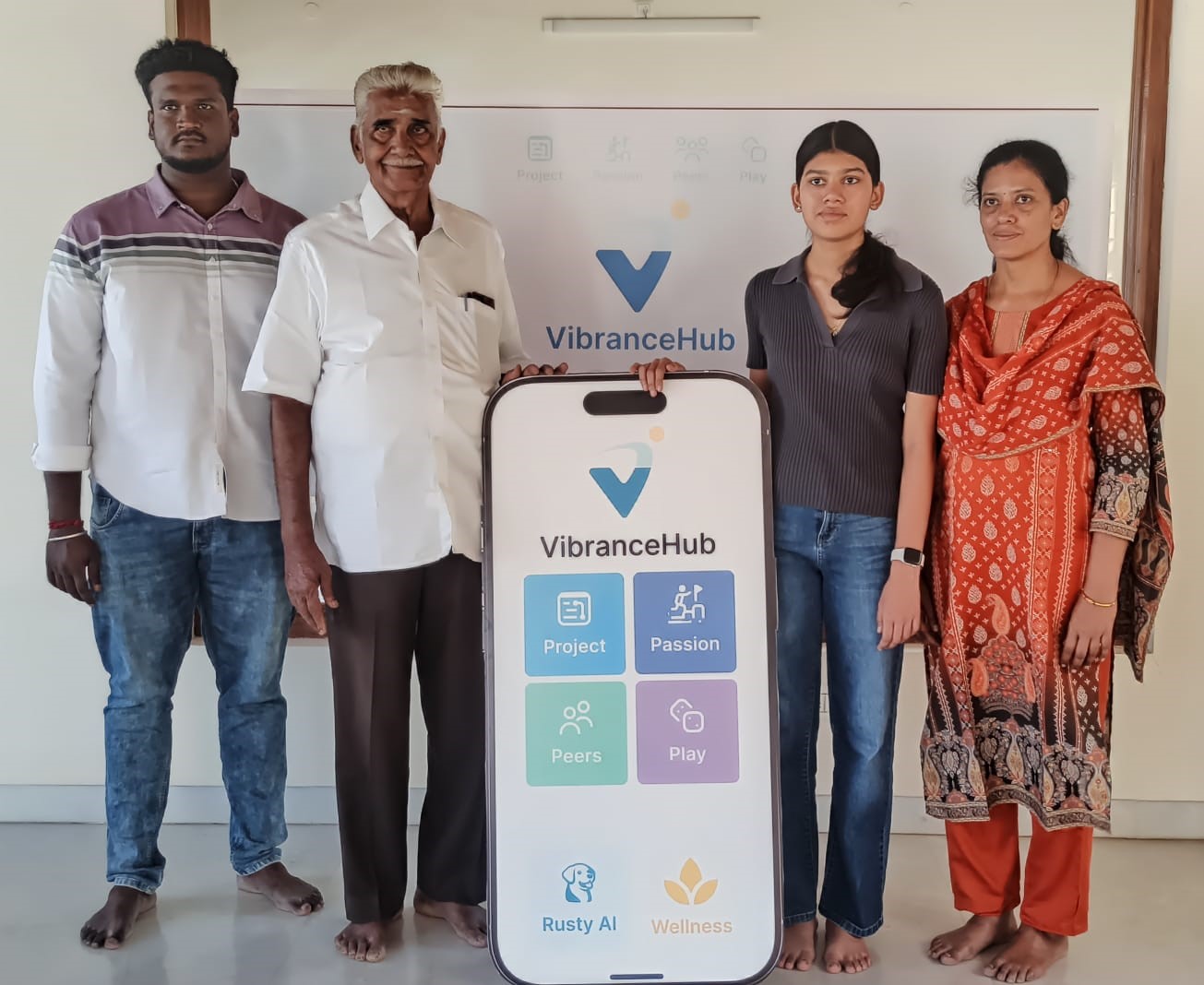

COIMBATORE — Rithanya Sivaram, a Class 12 student at The Indian Public School, has launched Vibrance Hub, a pioneering platform that fuses project-based learning, peer collaboration, and wellness support to fill a critical gap in education. As India navigates an AI-driven future, it becomes essential to emphasize creativity and sustained innovation over traditional rote knowledge.
“In the age of AI, information is commoditized. What matters now is what you can make, how you think, and whether you can sustain creative work over time,” Sivaram says emphatically. In her view, traditional educational models fall short by failing to cultivate these essential skills. She asserts that while initiatives like Atal Tinkering Labs provide students with the tools to explore and innovate at a national level, Vibrance Hub offers crucial scaffolding, a supportive community, and integrated wellbeing practices necessary for transforming interest into sustained creative output.
Developed on the principles of MIT’s Lifelong Kindergarten framework—known as Passion, Projects, Peers, and Play—Vibrance Hub advocates for a holistic approach to maker education. This model goes beyond merely constructing devices; it emphasizes the development of computational thinking, resilience through iteration, and collaborative abilities—capabilities that AI cannot replicate.
Vibrance Hub heralds a significant shift back to India’s educational roots. The shift away from rote learning traces back to the colonial era, marked by Lord Macaulay’s Minute on Education in 1835. This policy imposed a system aimed at producing clerks for colonial administration, overshadowing India’s rich tradition of experiential learning found in the gurukul system. Historically, students engaged in active knowledge creation, learning metallurgy through forging, astronomy via observation, and practicing medicine in real-world settings.
The National Education Policy (NEP) 2020 underscores the importance of reviving this maker-centric approach. It highlights that India’s future success hinges on nurturing creators and innovators, rather than rote memorization.
The Atal Innovation Mission (AIM), established in 2016 by NITI Aayog, stands out as India’s most ambitious initiative to operationalize this maker-centric philosophy on a large scale. AIM directly responds to NEP 2020’s vision by creating essential infrastructure that encourages hands-on learning across the country.
As educational paradigms shift towards creativity, platforms like Vibrance Hub pave the way for future thinkers. By merging project-based learning with wellness practices, it nurtures a supportive environment and fosters sustainable innovation among students. Rithanya Sivaram’s initiative exemplifies a new wave in education aimed at preparing young minds for a rapidly evolving world.

